What a Properly Equipped Plumbing Van Carries on Ilhabela
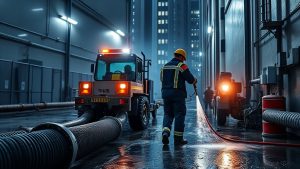
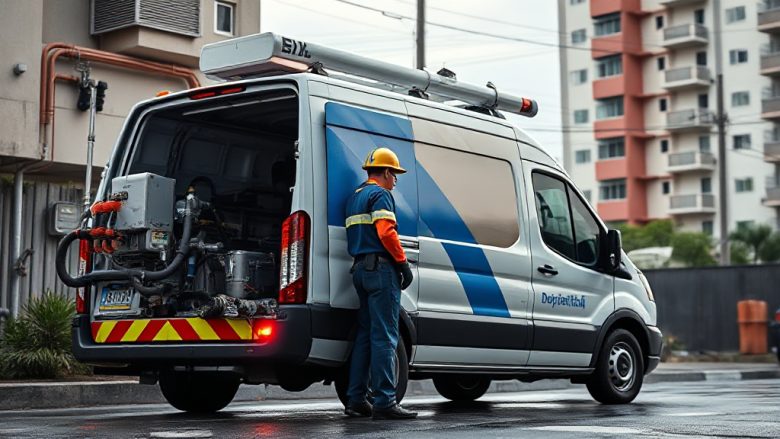
Open the rear doors of a service van parked near the ferry terminal on Ilhabela and the first thing you notice is order. Coiled hoses hang on hooks, a pressure washer sits bolted to a steel skid, and labeled bins hold fittings sorted by diameter. This is not a random collection of tools. Every item on board answers a specific failure mode that a desentupidora Bertioga SP crew is likely to meet on an island where the road network is short and the sewage systems are often old.
Judging a plumbing company by its vehicle is a practical shortcut. The equipment tells you what kind of job the team expects to handle, how quickly they can start, and whether they carry enough spares to finish without a second trip. Below is a walkthrough of what a fully equipped emergency unit carries, item by item, and what the absence of each piece signals.
The rear compartment: core clearing equipment
The heart of any emergency van is the clearing gear. Without it, a technician can diagnose a blockage but cannot remove it. A properly stocked unit carries three families of tools: mechanical augers, high-pressure jetting equipment, and manual rods for tight or fragile lines.
Motorized augers and sectional cables
A motorized drain auger with interchangeable cutting heads handles most household and commercial clogs. The cable sections are typically 8 to 15 meters long and can be coupled together for longer runs. On Ilhabela, where many properties sit on steep terrain and have long lateral lines to the street, sectional cables matter more than a single short snake. If a van carries only a hand crank, expect slow work on anything beyond a kitchen sink.
Hydrojetting unit and water tank
High-pressure jetting is the standard method for grease, roots, and scale inside pipes. A proper unit includes a pump capable of 3,000 to 4,000 PSI, a hose reel of 30 to 50 meters, and a water tank of at least 200 liters so the crew can work without depending on the customer’s supply. The nozzle set is equally important: a penetrating nozzle for the first pass, a flushing nozzle for debris removal, and a chain cutter for root intrusion. A van without a jetting skid can still clear a simple clog, but it cannot restore a badly fouled main line.
Manual rods and inspection tools
Not every pipe tolerates a spinning cable. Older ceramic or cast-iron lines under island houses can crack if treated roughly, so a set of nylon rods and a drain camera are essential companions. The camera lets the technician see the pipe condition before choosing a method. A crew that arrives without a camera is guessing, and guessing on an island with limited hardware stores is expensive.
Pumps, tanks, and waste handling gear
Blockages are only half the job. Standing water, backed-up sewage, and full septic tanks require removal before any repair can begin. The equipment for this work is bulky, which is why a serious desentupidora Bertioga operation runs vans with reinforced suspensions and dedicated tank space.
Vacuum pump and holding tank
A vacuum truck or a van-mounted vacuum pump with a holding tank of 500 to 1,000 liters allows the crew to extract liquid waste safely. This matters for flooded basements, overflowing grease traps, and septic tank cleaning. Without a vacuum system, a technician can only bail by hand, which is slow and unhygienic.
Septic tank hose and fittings
Septic service requires a separate set of hoses with cam-lock couplings, plus a macerator pump for distances where gravity will not help. On Ilhabela, where many homes rely on septic systems rather than a municipal sewer, this equipment is not optional. A van that carries only drain-clearing tools will have to call a second vehicle for any tank work.
Spill containment and disinfection supplies
Sewage backup is a health hazard, and a professional unit carries absorbent pads, a portable pump sprayer with disinfectant, and disposable protective suits. These items are cheap but their absence tells you the crew treats cleanup as an afterthought. Look for a sealed bin labeled for biohazard waste; it shows the company follows disposal rules rather than dumping residue on the street.
Hand tools, fittings, and the small parts that save a return trip
The difference between a one-visit fix and a two-day ordeal often comes down to a single fitting. A well-organized van carries a curated inventory of the parts that fail most often, sorted so a technician can find them in seconds.
- Assorted PVC and PPR fittings in diameters from 40 mm to 100 mm, including elbows, tees, couplings, and reducers.
- Rubber gaskets and O-rings for compression joints, trap seals, and pump housings.
- Pipe cutters, deburring tools, and solvent cement for making leak-free repairs on the spot.
- Thread seal tape and anaerobic sealant for metal connections that tend to weep after reassembly.
- Replacement drain covers and floor drain grates that fit the standard sizes found in older island buildings.
A van that carries a broad fitting inventory can complete a repair without driving back to a warehouse. On Ilhabela, where a round trip to the mainland can consume half a day, that inventory is a direct measure of reliability.
Safety, access, and diagnostic equipment
Emergency plumbing happens in confined spaces, at night, and often in buildings with poor access. The safety and diagnostic gear on board determines whether the crew can work at all, let alone work well.
Gas detection and confined-space entry gear
Sewer gas can be lethal in enclosed areas. A professional van carries a multi-gas detector, a blower for ventilation, a tripod and harness for manhole entry, and a portable lighting tower. These items are not glamorous, but their presence signals that the company follows confined-space regulations rather than improvising.
Pipe inspection camera and locator
A push-rod camera with a sonde transmitter lets the technician see the blockage and mark its location on the surface. This turns a blind excavation into a targeted repair. If the van has no camera, expect the crew to open more ground than necessary or to recommend replacement without evidence.
Electrical and pressure testing tools
Blockages sometimes originate from a failed pump or a broken float switch. A van equipped with a multimeter, a clamp meter, and a pressure gauge can diagnose the cause rather than just clearing the symptom. This is the difference between a temporary fix and a durable repair.
What missing equipment tells you about a company
When you look inside a service van, you are reading the company’s operating assumptions. A vehicle stocked with jetting gear, vacuum capacity, and a full fitting inventory is built for complex, remote, or urgent work. A vehicle with only a hand snake and a bucket is built for the simplest jobs and will subcontract anything harder.
For a homeowner or building manager in Bertioga and the surrounding coast, the practical test is simple. Ask what the crew carries before they arrive. If the answer includes a camera, a jetter, and a vacuum tank, the company expects to solve the problem on the first visit. If the answer is vague, expect a diagnostic visit followed by a second appointment. Choosing a desentupidora em Bertioga SP with a fully equipped vehicle is not about luxury; it is about avoiding the cost and inconvenience of repeated callouts.
Equipment also predicts how a company handles the unexpected. A blocked main line that turns out to be root intrusion needs a cutter head. A backed-up septic tank needs a vacuum hose. A collapsed pipe needs a camera and a locator. Each of these tools occupies space on the van, and each one represents a decision by the owner to be ready for that scenario. The back doors of a service van are, in that sense, an honest inventory of what the company is prepared to do.